

Executive Summary
Painting your deck not only enhances its curb appeal but also protects the wood from moisture, sunlight, and everyday wear. This guide explains the steps involved in deck painting, what types of paint work best, and when hiring a professional like Paintzen makes all the difference in ensuring lasting results. With the right preparation, paint, and expertise, you can transform a weathered deck into a polished outdoor space that adds long-term value to your home.
Why Paint Your Deck Instead of Stain or Seal?
Painting is a great way to revitalize your deck’s appearance while giving it extra protection from the elements. It provides a durable, colorful coating that shields against UV rays, rain, and foot traffic. Before deciding on a finish, it helps to understand how painting compares to staining and sealing. Each option provides different benefits in terms of appearance, maintenance, and protection.
Paint vs. Stain vs. Sealant: What’s the Difference?
Paint creates a solid, opaque layer that hides imperfections and adds bold color, while stain enhances the wood’s natural grain. Sealants, on the other hand, provide transparent moisture protection without changing the color much. Knowing which finish aligns with your goals will help you achieve the desired balance between aesthetics and durability. Paint lasts longer than stain or sealant, but it requires more surface preparation to ensure proper adhesion.
When Painting Is the Better Option
Painting is ideal for older decks, those with discoloration, or when you want a dramatic color change. It provides strong UV protection and helps extend the life of aging wood. Professional painters can apply the right primer and paint type for your deck material, ensuring adhesion and weather resistance. Painting also simplifies future maintenance—just repaint as needed instead of restaining every few years. Plus, professional application ensures smooth, even coverage that enhances curb appeal and resale value.

Choosing the Best Paint for Your Deck
Selecting the right paint is key to ensuring your deck resists the elements and looks great for years. Professional painters often base product recommendations on the deck’s material, climate, and level of use. Using the wrong type of paint can lead to premature peeling or fading, so it’s worth consulting an expert to match paint type to your environment.
Oil-Based vs. Water-Based Deck Paint
Oil-based paints penetrate deeper into the wood and offer excellent durability, while water-based paints dry faster, are easier to clean up, and resist cracking and peeling. Each has pros and cons depending on your deck’s exposure to sun and rain. Paintzen pros can help determine which formula will perform best in your region’s weather conditions. In general, oil-based paints are best for high-traffic or coastal areas, while water-based paints work well in variable climates with quick drying times.
Best Paint Finishes for Decks
Decks benefit from finishes that can handle heavy foot traffic and fluctuating temperatures. Semi-gloss or satin finishes offer a balance between durability and slip resistance. Gloss finishes, while durable, may highlight imperfections and become slippery when wet. Professionals can apply texture additives or anti-slip coatings for added safety. Choosing the right finish also affects how often your deck will need touch-ups, as some finishes hide wear better than others.
How Professionals Prepare Decks for Painting
Proper surface prep is essential for lasting results. Without it, even the best paint will peel or fade prematurely. Professional painters know how to clean, repair, and prime decks to ensure paint bonds correctly. This step not only improves paint adhesion but also helps detect structural issues before they worsen.
Cleaning and Sanding the Deck
Before painting, decks are pressure-washed to remove dirt, mildew, and old coatings. Once dry, the surface is sanded to create a smooth, paint-ready texture. Professionals use the right grit sandpaper to avoid damaging the wood grain. Clean, dry surfaces ensure the new paint adheres evenly and lasts longer. This process also opens up the wood’s pores, allowing primer and paint to absorb better for a stronger bond.
Priming for Maximum Adhesion
Primer acts as a bridge between the wood and paint, sealing porous areas and preventing peeling. It’s especially important for older decks or those previously stained. Applying primer evenly and letting it cure fully helps the topcoat perform its best under changing weather conditions. Professionals select primers based on wood type, paint formulation, and local humidity levels to ensure the deck coating holds up over time.
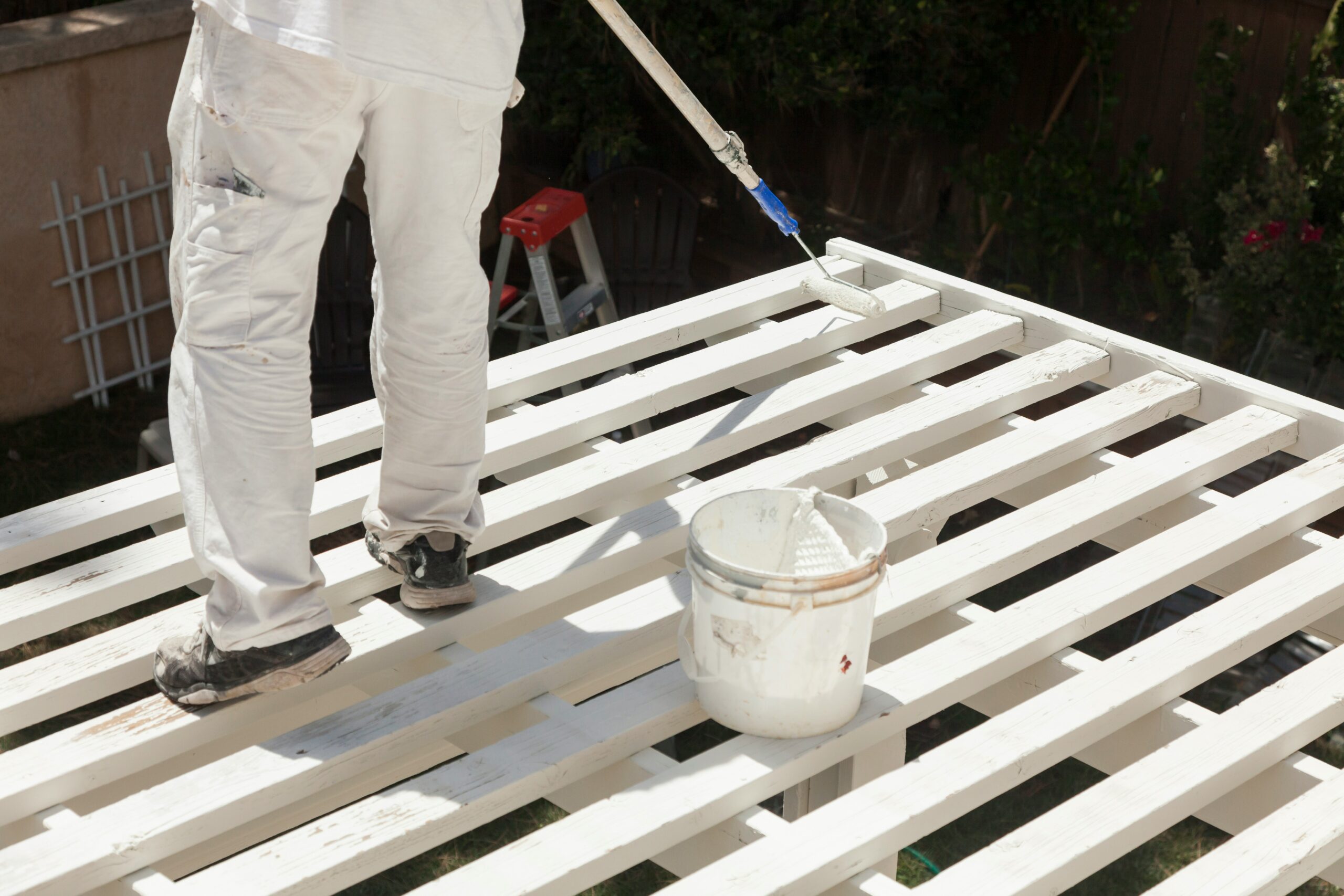
Step-by-Step: How to Paint a Deck Like a Pro
Professional painters follow a structured process that ensures even coverage and long-term protection. While it might look simple, each step requires precision and the right materials. Hiring professionals can save you time and eliminate common mistakes like uneven coats or poor surface prep.
Step 1 – Prepare and Protect Surrounding Areas
All furniture, plants, and railings are moved or covered to protect from paint splatters. Taping off edges and trim ensures sharp, professional-looking lines. This step sets the foundation for a neat, efficient painting process. Proper preparation also minimizes cleanup and prevents paint from getting onto landscaping or siding. Professionals also inspect nearby structures to ensure nothing interferes with the painting process and adjust the setup as needed.
Step 2 – Apply Primer and First Coat
Using high-quality primer helps seal the wood and enhances the paint’s durability. Professionals typically start with a roller or sprayer, followed by back-brushing for even coverage. The first coat should be thin and uniform, setting the stage for a smooth second coat. They also monitor temperature and humidity to ensure the paint cures correctly for optimal adhesion and finish. By working systematically, pros avoid overlaps or visible brush marks, resulting in a flawless base layer.
Step 3 – Add a Second Coat and Finishing Touches
After the first coat fully dries, painters apply a second layer for consistent color and protection. This ensures longevity against weather and wear. Once cured, the deck is inspected for any touch-ups, ensuring every board is evenly coated. Professionals may also apply protective sealers or texture finishes depending on your deck’s needs for extra durability. The final inspection helps guarantee uniformity, long-lasting color, and a clean, professional look.
How Long Does Deck Paint Last?
A professionally painted deck typically lasts 5–10 years, depending on paint type, exposure, and maintenance. Regular cleaning and touch-ups help extend the lifespan. Paintzen pros use premium paints that resist peeling, UV damage, and mold growth. Consistent maintenance, including sweeping debris and washing annually, helps the painted surface retain its vibrant color and finish.
Key Takeaways
- Painting offers bold color and superior UV protection compared to stains.
- Choose oil- or water-based paint depending on climate and deck condition.
- Proper cleaning, sanding, and priming ensure paint lasts longer.
- Hiring professionals like Paintzen guarantees even coverage and durable results.
- Regular upkeep helps extend the life of your painted deck.
FAQs About Deck Painting and Maintenance
What kind of paint should I use on my deck?
Exterior-grade latex or oil-based paints specifically formulated for decks offer the best durability. They resist cracking, fading, and mildew. Professionals can help choose a brand and finish based on your wood type and regional climate. Using the right paint also makes future maintenance easier and keeps your deck looking newer for longer.
Can I paint over a stained deck?
Yes, but only if the stain is fully cured and the surface is properly prepped. Old stain and sealant layers need to be stripped or sanded for new paint to adhere well. Professionals can assess the deck’s condition and determine whether painting or restaining is the best approach. In some cases, they may recommend primer or bonding agents to ensure long-term adhesion.
How long does it take to paint a deck?
Depending on the deck’s size and condition, a professional team can complete the job in one to three days. This includes cleaning, drying, priming, and painting time. Drying conditions and humidity can slightly extend the timeline. Professionals also account for weather forecasts to avoid painting in high humidity or direct sunlight for best results.
Is painting better than staining for longevity?
Paint tends to last longer than stain, often up to a decade with proper prep and maintenance. However, stain allows the wood grain to show and requires reapplication every few years. Professionals can recommend the finish that best matches your maintenance goals. Painting provides a protective layer, while staining enhances natural beauty—each has its own aesthetic and upkeep needs.
Related Reading
- Acrylic vs. Oil Based Paint: What Are The Differences?
- The Best Paint Colors for Rooms With Lots of Natural Light
- How to Change the Size of Your Room With Paint
Get a Free Quote from Paintzen
Thinking about painting your deck? Let Paintzen’s expert painters handle the prep, paint selection, and application for you. Their team ensures every surface is properly cleaned, primed, and painted for professional, long-lasting results. Get your free quote today to enjoy a beautiful, durable deck without the hassle.